

Reflecting on 25 Years of Reconciliation
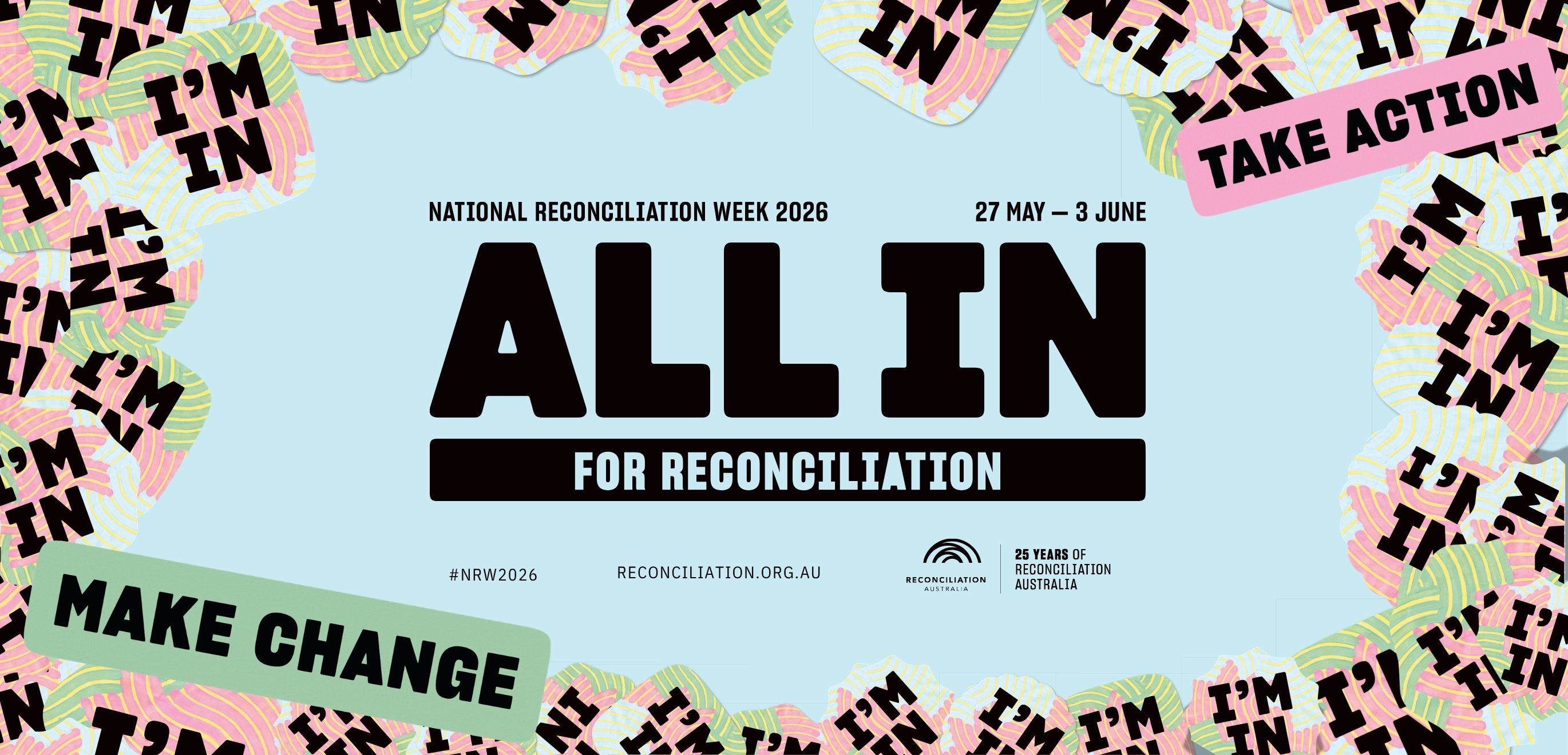
National Reconciliation Week (NRW), held each year from 27 May to 3 June, is a time for all Australians to reflect on our shared history and continue building a more equitable and inclusive future. In 2026, National Reconciliation Week marks a significant milestone - 25 years of Australia’s formal reconciliation journey, following the establishment of Reconciliation Australia in 2001. This milestone provides an opportunity to reflect on the progress made, acknowledge the work that remains, and recommit to reconciliation as a shared responsibility.
Understanding Reconciliation
Reconciliation is about strengthening relationships between Aboriginal and Torres Strait Islander peoples and non‑Indigenous Australians. It is grounded in truth‑telling, respect for the world’s oldest continuing cultures, and a commitment to equity and inclusion across all aspects of Australian society.
Why These Dates Matter
The dates of National Reconciliation Week are grounded in significant moments in Australia’s history:
- 27 May commemorates the anniversary of the 1967 Referendum, when Australians voted overwhelmingly to amend the Constitution to recognise Aboriginal and Torres Strait Islander peoples.
- 3 June marks the anniversary of the Mabo decision, which recognised Native Title and overturned the doctrine of terra nullius.
These moments remind us that reconciliation is shaped by history, law and lived experience, and that progress is possible when there is collective will.
Marking 25 Years of Reconciliation
As we acknowledge 25 years of reconciliation, National Reconciliation Week 2026 invites us to reflect on how far Australia has come, while recognising that reconciliation is an ongoing journey rather than a fixed destination.
For Mirvac, this milestone reinforces the importance of listening, learning and taking meaningful action. As a leading Australian asset creator and curator, our purpose is to reimagine urban life. We strive to leave a positive legacy by collaborating with communities to create thriving precincts. We have an important role to play in creating a more reconciled Australia. We are in the unique position to reimagine spaces and recognise that to be aware and sensitive to history and culture we must listen and learn how to integrate cultural knowledge sensitivity into our work.
Learn about Mirvac's Reconciliation Action Plan HERE.